
VR, AR & MR DEVELOPMENT
Custom VR, AR and MR experiences for a wide range of virtual and augmented reality headsets. We combine 3D design with natural interactions through controllers or hand tracking to create immersive experiences and interactive products.
EXPLORE XR →MOBILE APP DEVELOPMENT
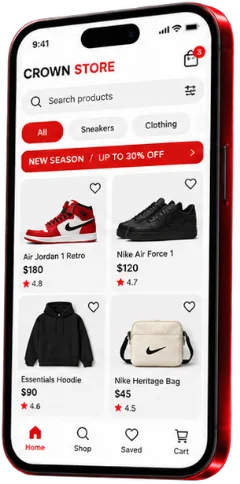
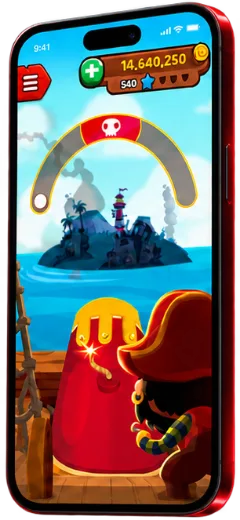
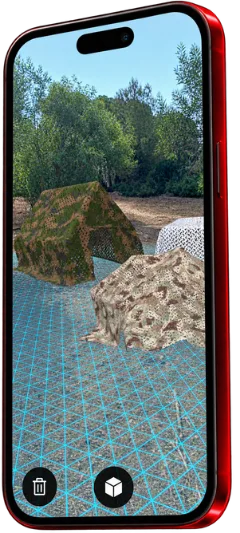
Custom iOS and Android apps, drawing on the founder’s experience with products that served millions of users. We also build mobile AR experiences, either native with ARKit and ARCore or in Unity with AR Foundation.
EXPLORE MOBILE →DESKTOP SOFTWARE
Custom applications for PCs and workstations: interactive systems, simulations and 3D tools. We bring user interfaces, data and complex calculations together in one clear, easy-to-use product.
EXPLORE PC →WEB & WEB APP DEVELOPMENT
Websites and web apps that run directly in the browser, with nothing to install. Responsive interfaces for desktop and mobile, with room for 3D and interactive content.
EXPLORE WEB →3D MODELING & UI/UX DESIGN
Custom 3D models and animation, alongside user experience and interface design (UI/UX). We plan the visual language and the interactions together, to create a product that looks great and is easy to use.
EXPLORE DESIGN →SELECTED WORK
Founder-led projects, from concept to deployment.
Enzymatic Lab Educational Model
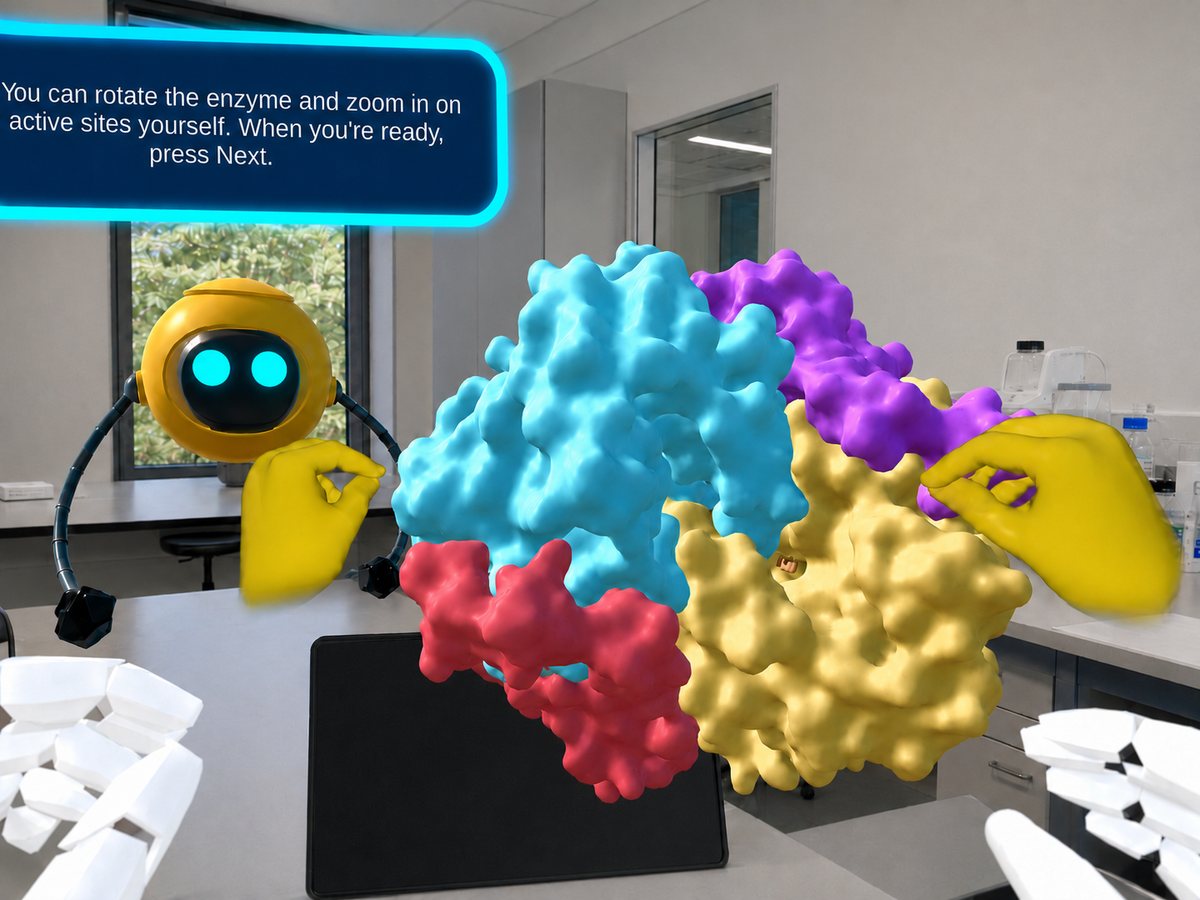
The challenge. In the biochemistry lab, students run a batch enzyme reactor experiment but never see the molecular world driving it. The enzyme stays invisible, chirality is taught from flat diagrams, and the polarimeter reading changes without a clear reason why. It all stays abstract.
The solution. We built an augmented reality learning module for Meta Quest 3 that places the molecular world right on the student's real desk, with no controllers and no prior experience needed. Robi, a friendly bilingual robot instructor, guides students as they compare molecules by hand, rotate the enzyme, watch the reaction unfold step by step, and even fire polarized light at molecules to see how structure shapes the result. Students stay seated at their own desk and see the real room around them the whole time, which keeps motion sickness to a minimum.
The result. What was invisible at the bench becomes tangible. Students move inside structures they could never see, handle them with their own hands, and build every concept by doing and deciding rather than by reading a flat diagram. Built and in use at the Wolfson Faculty of Chemical Engineering, Technion.
Developed at Dana Research Group
Immersive Fugacity VR Experiment
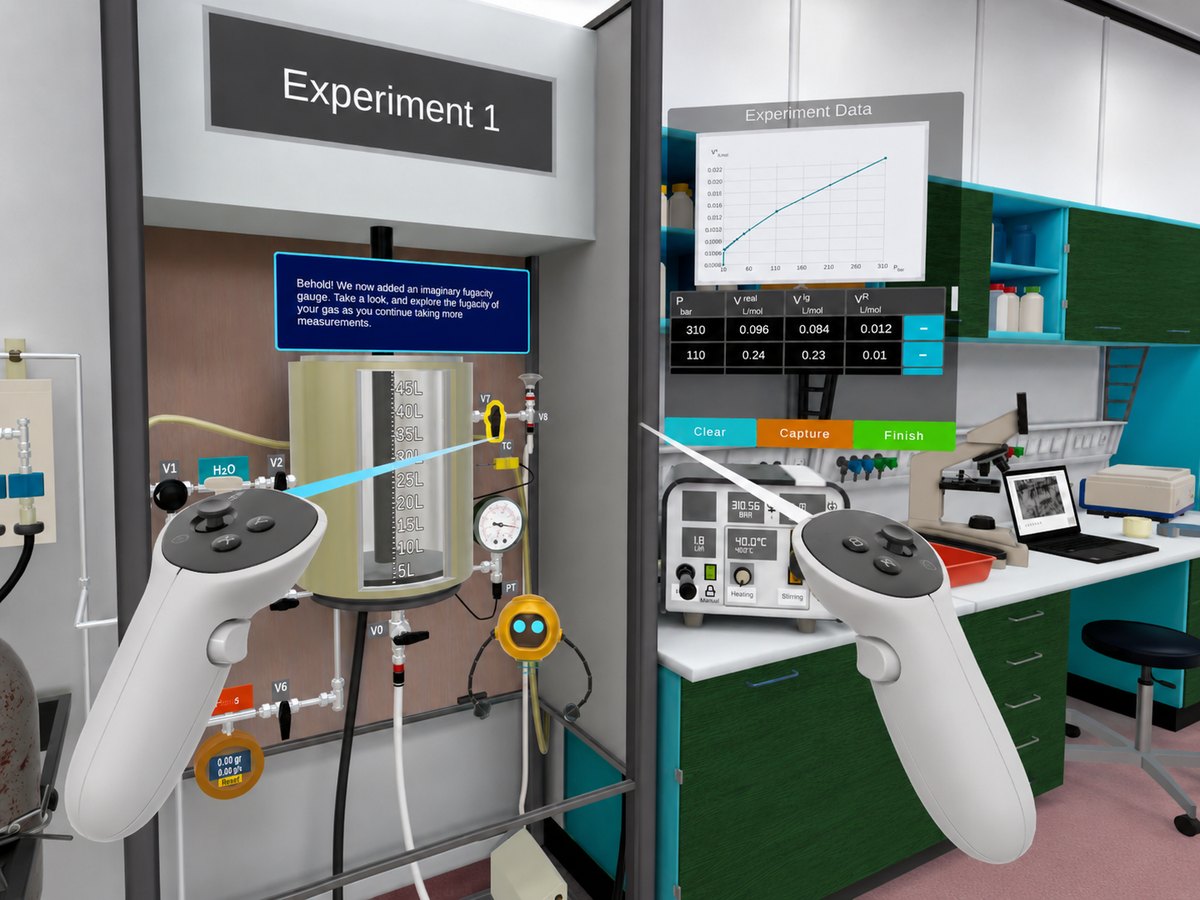
The challenge. How do you teach an abstract thermodynamic concept like fugacity to a whole class at once, consistently and safely, without each student getting a different experience?
The solution. An hour-long virtual reality experiment where students operate the lab equipment themselves, heating the material, moving the piston, opening valves, and reading the pressure, guided by a virtual instructor. Up to 12 devices run in parallel, each paired with the instructor's tablet. Movement inside the experiment is deliberately designed to keep motion sickness to a minimum, so a full hour in the headset stays comfortable for an entire class.
The result. The whole class goes through the same precise, safe experience together, instructors see exactly where each group is and collect the session data, and an abstract concept becomes a tangible, guided experiment. In use in the Thermodynamics B course at the Technion.
Developed at Dana Research Group
Molecular Scientific ML Research Tool
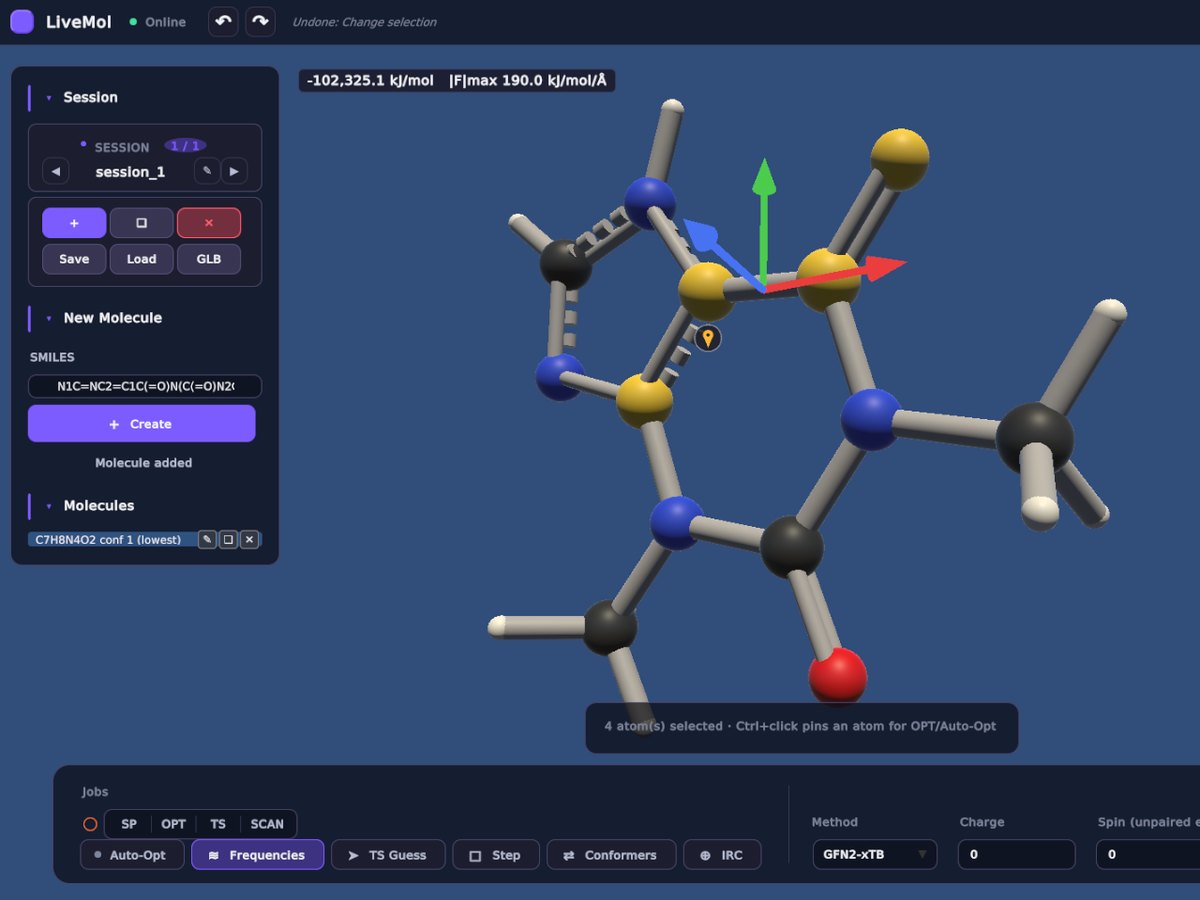
The challenge. Researchers needed to build and modify molecular structures and see results immediately, instead of waiting for one calculation at a time and guessing what would change.
The solution. We built an interactive 3D tool where the researcher builds and edits a molecule, and a Python compute server runs the quantum chemistry calculation, using established engines including ASE, tblite, Open Babel and Sella, and returns the result onto the model in front of them, without leaving the flow.
The result. Research becomes fast, visual, and intuitive, and the researcher stays inside the structure while the calculation runs, instead of waiting on one job at a time. Built for the Wolfson Faculty of Chemical Engineering at the Technion.
Developed at Dana Research Group
Physical Meta Quest Classroom Setup
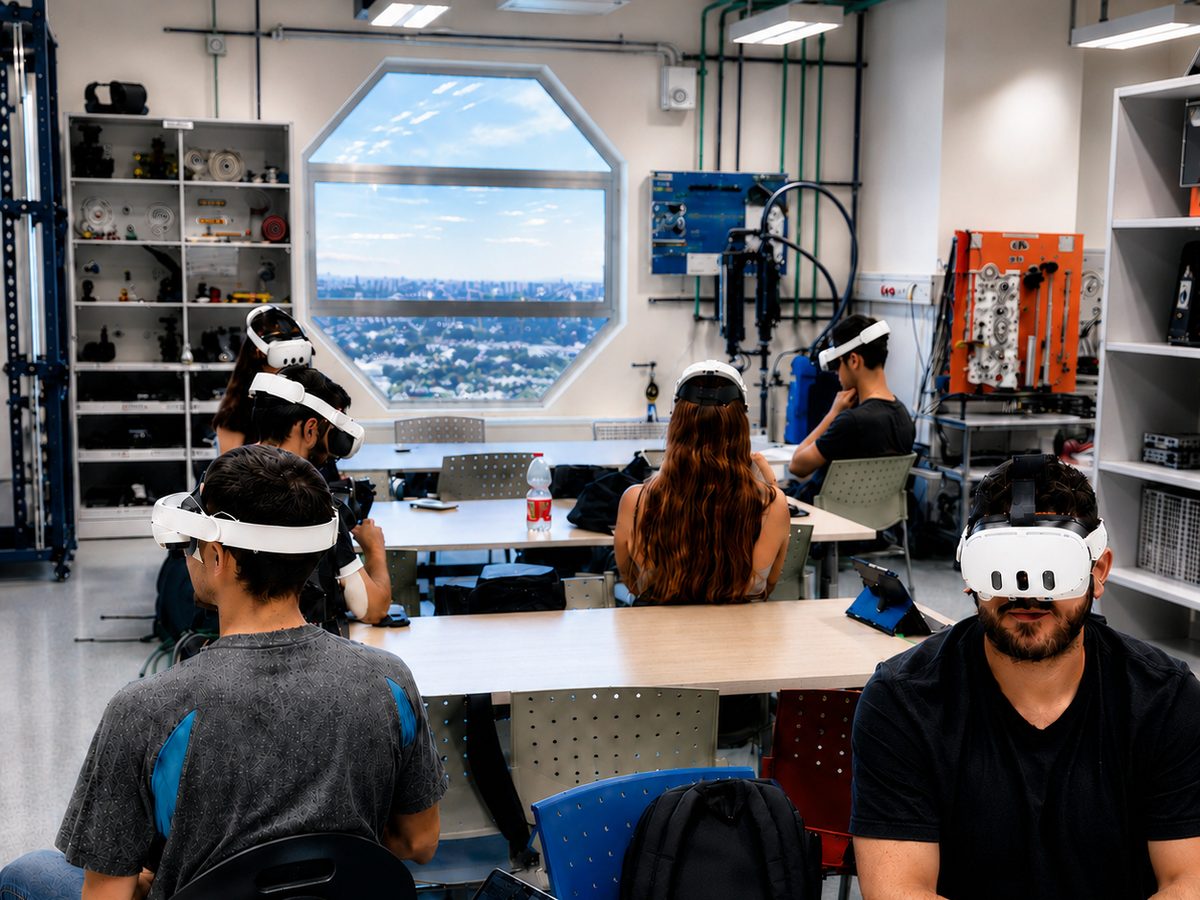
“Meta Quest 3” by Elin, CC BY 4.0
The challenge. The Technion wanted a classroom that runs immersive virtual reality for many groups at once, reliably, without staff losing every lesson to technical issues.
The solution. We consulted end to end, from early planning and hardware selection through classroom layout, device configuration, deployment, testing, and the instructors' workflows. Up to 12 Meta Quest 3 headsets, each with a paired tablet.
The result. A classroom that simply works, where instructors follow each group, support students, and collect data every session. The technology stays in the background, and teaching stays center stage.
Developed at Dana Research Group
END-TO-END PRODUCT DESIGN
CONCEPT & UI/UX DESIGN
Concept, visual storytelling and spatial interfaces designed around how people see, move and interact.
DEVELOPMENT
End-to-end development, stable and modular, easy to extend later without rebuilding from scratch.
3D ART & ANIMATION
In-house 3D models, animations and effects, integrated into immersive experiences and working products.
OPTIMIZATION
Baked lighting, reduced draw calls and gesture tuning for responsive AR/VR experiences on the target hardware.
SUPPORT & MAINTENANCE
Ongoing support and live updates to keep your application evolving.
TECHNOLOGIES


ABOUT
A decade of shipping real-time 3D
Red Crown Interactive is a development studio led by Julia Pavlov, a software engineer specializing in real-time 3D, with more than a decade of experience across XR, medical technology, gaming, and defense. Depending on each project's needs, the studio assembles and manages development, 3D, and design teams, so every project is built as a complete whole, from code to visuals.
We build systems where precision, stability, and performance matter as much as the experience.





FAQ
How much does it cost to build a VR or mixed reality app?
The cost depends on scope, platform, and content complexity. We start with a short call to understand what you need, then give a clear, transparent estimate before we begin, with no surprises.
How long does it take to build an app like this?
It depends on scope. A focused module can launch within weeks, while a larger system takes longer. We set goals and milestones up front, so you always have a clear picture of the pace.
Which platforms do you develop for?
We develop for Meta Quest 3, iOS and Android, desktop, and WebGL, mainly in Unity. We choose the platform that fits your audience and goals together.
Do you work with universities and research institutes?
Yes. A significant part of our work is for academic and research institutions, including the Technion. We are at home with scientific and engineering content, safety requirements, and multi-user classrooms.
Who actually builds the project?
The project is led and built by the founder, a senior engineer and designer, end to end, so you talk directly with the person who both plans and builds, with no middlemen. For larger projects, a carefully selected, high-standard professional team can be brought in, working under her lead and supervision, so quality is maintained throughout.
Can we start small or with just an initial idea?
Absolutely. Even an initial idea is a great start. You can begin small, with a pilot or a prototype, and grow from there with confidence.
GOT A COMPLEX IDEA?
LET'S MAKE IT REAL.
Tell us what you want to build, even if it's still a rough idea. You'll talk directly with the person who also builds it, and we usually get back to you within one business day.